
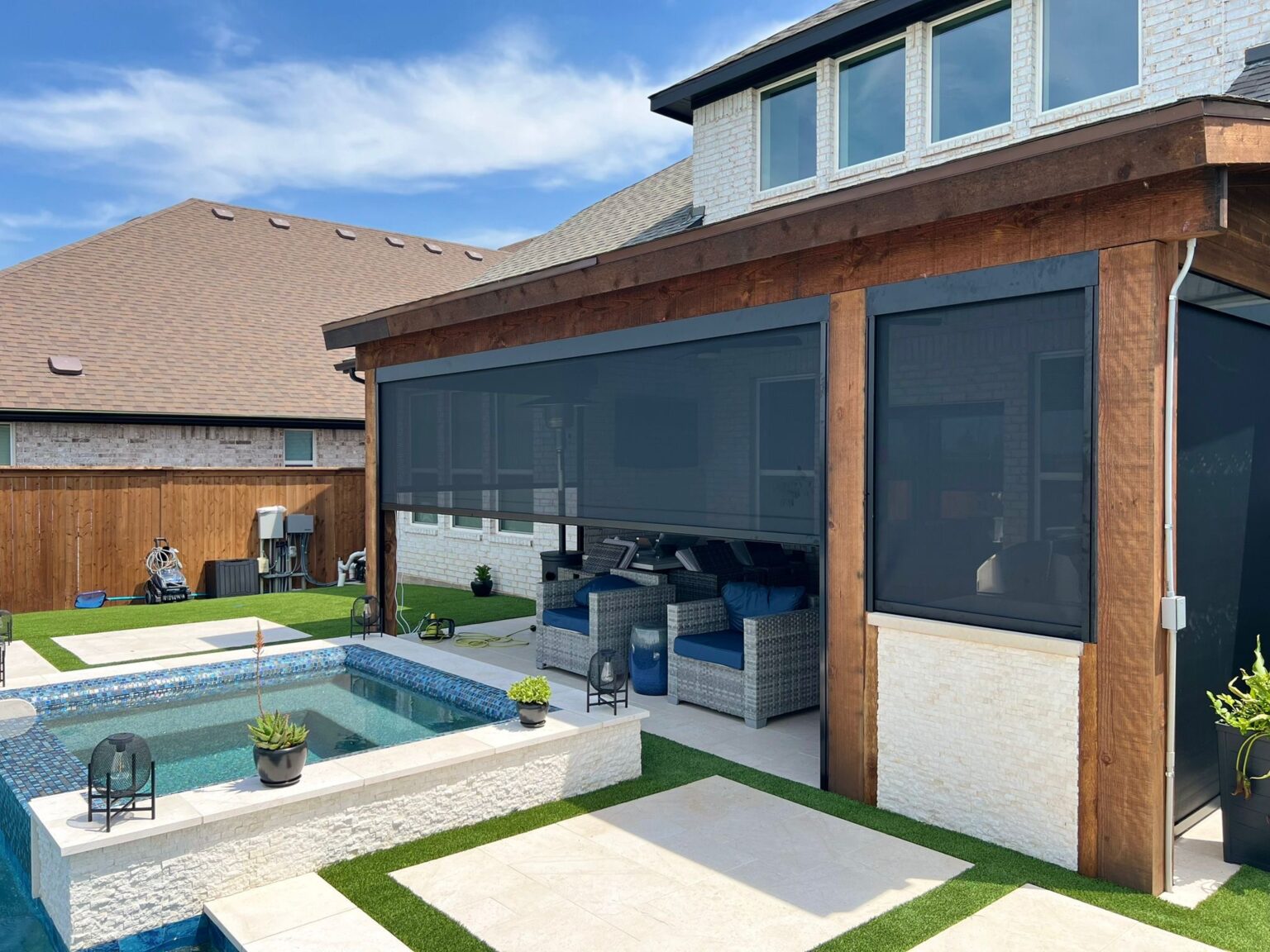
How to pick the right shade for each room and patio, what motorization really adds, how to measure, and what drives the price. Written by the team that builds them in Carrollton.
Windows bring in light and views, but in Texas they also bring in heat, glare and UV that fades floors, rugs and furniture. The right shade lets you choose how much of each comes in, room by room and hour by hour.
Shades can save energy too. In testing by Oak Ridge National Laboratory, cellular shades saved up to 20% on heating energy and up to 15% on total heating and cooling energy compared with no shades, according to a U.S. Department of Energy fact sheet.

Every style below is made to measure in our Carrollton factory and can be motorized.
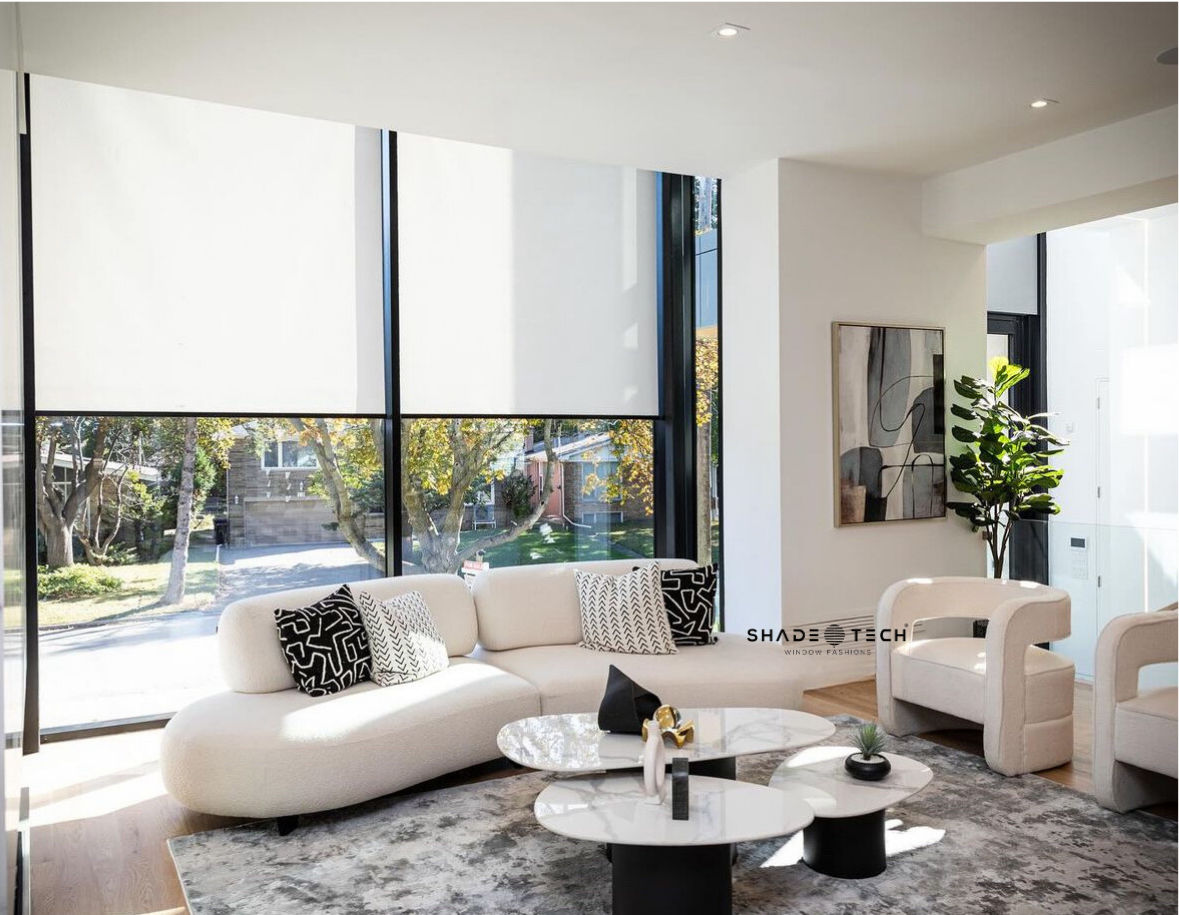
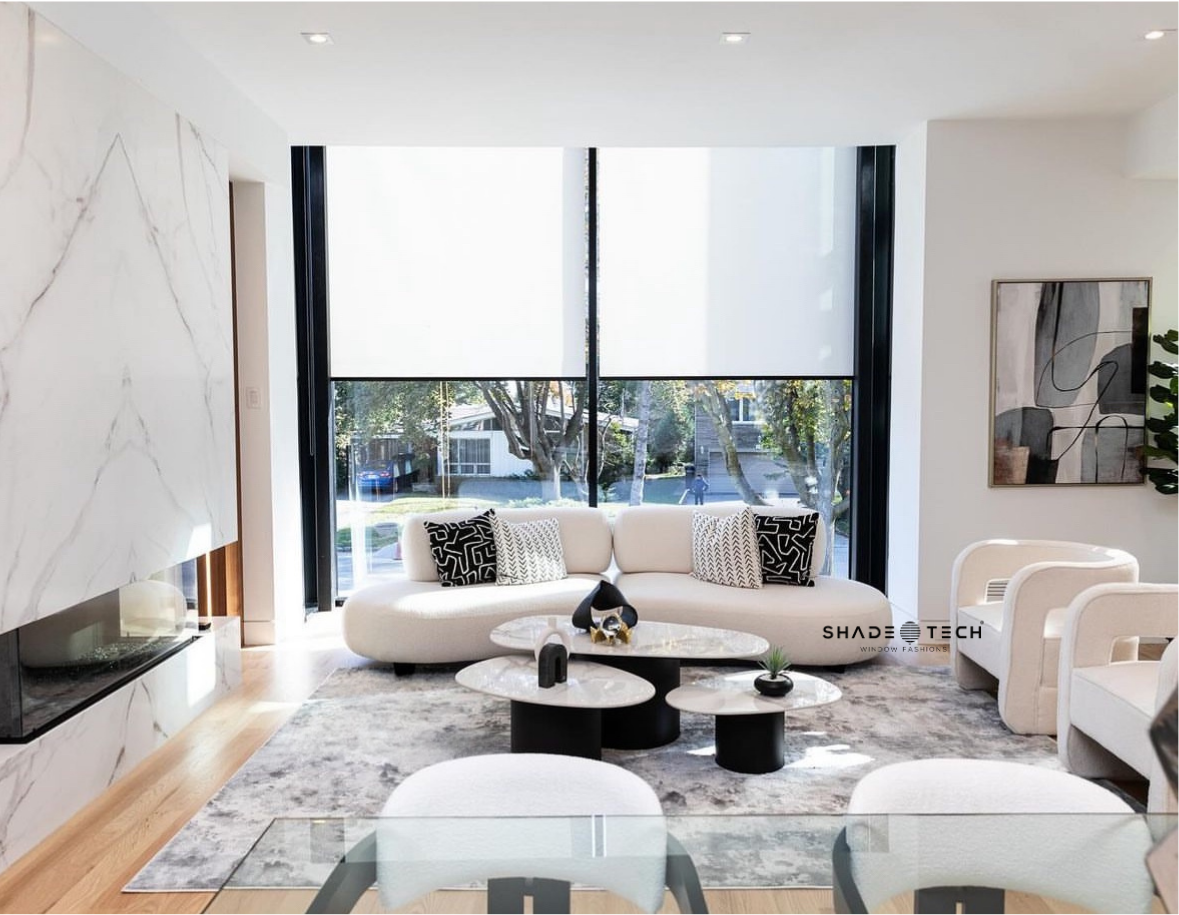
Clean and simple. Solar, light-filtering or blackout fabric. Best for living areas, offices and media rooms.
Roller shades →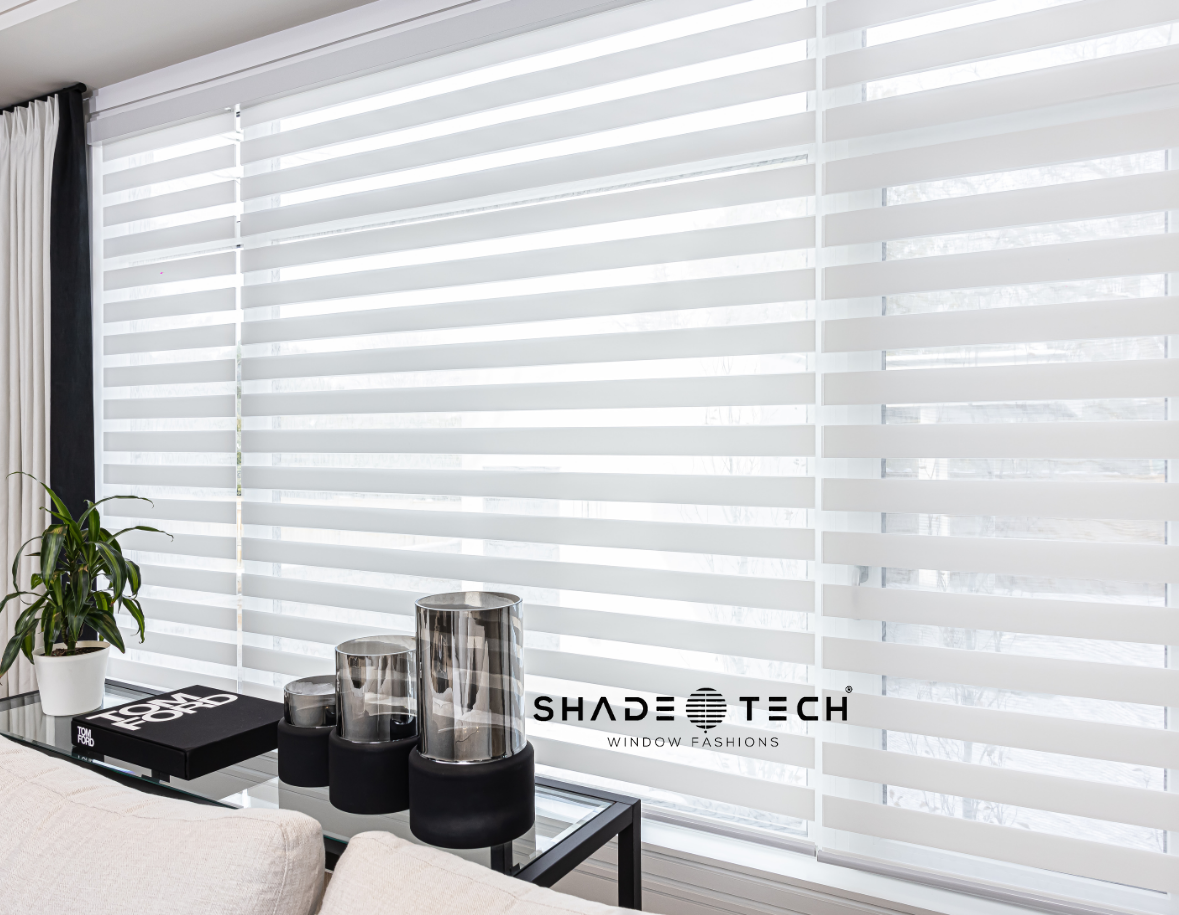
Alternating sheer and solid bands you can line up for view or privacy. Best for living and dining rooms.
Duo shades →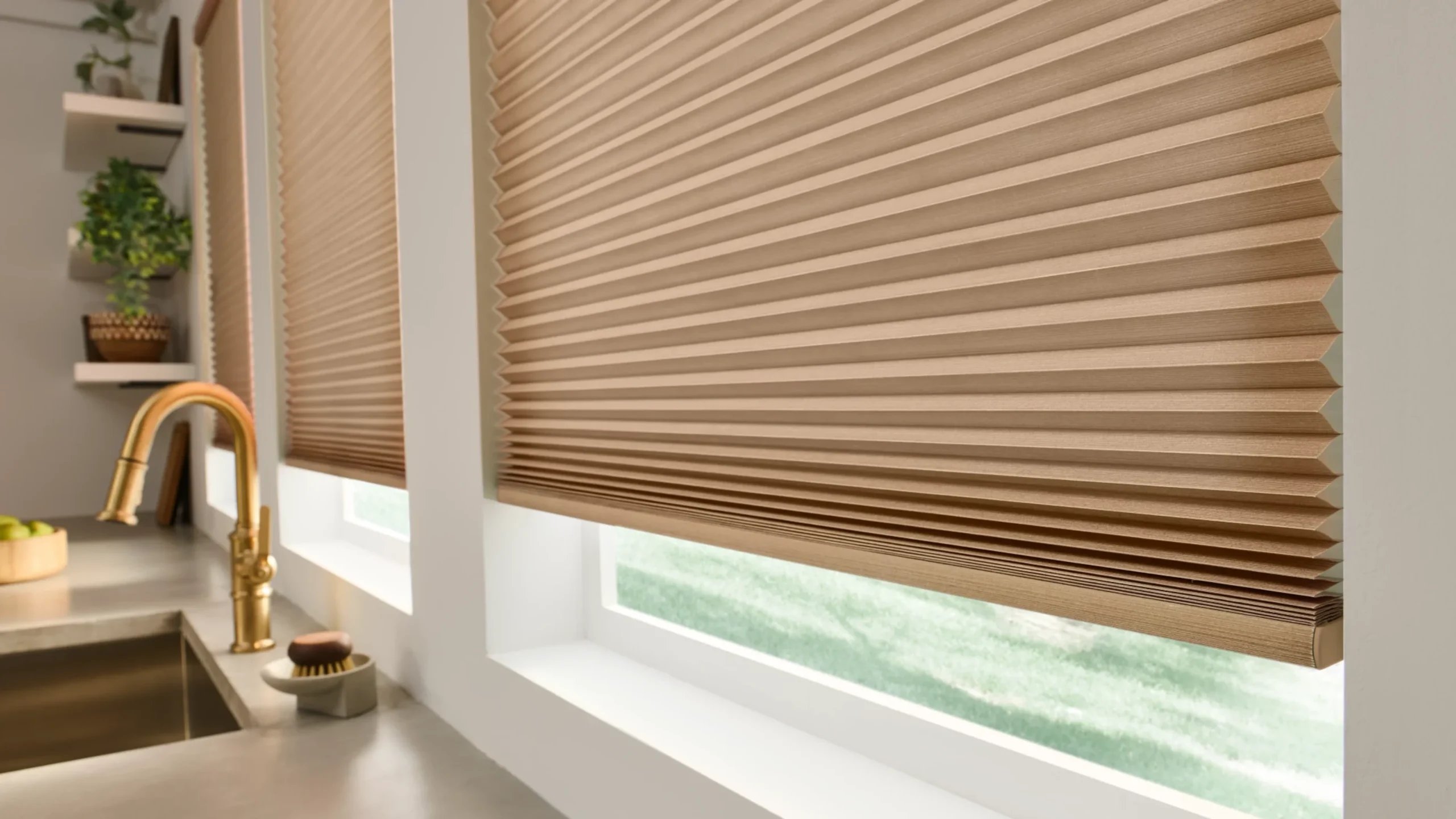
Honeycomb cells trap air for insulation. Best for bedrooms and rooms with heat or cold problems.
Cellular shades →
Soft fabric folds with the look of drapery. Best for bedrooms, dining rooms and formal spaces.
Roman shades →
Bamboo, reed and jute for natural texture. Add a liner for privacy. Best for living spaces and sunrooms.
Woven shades →Made for roof and angled glass, usually motorized. Best for vaulted ceilings and sunrooms.
Skylight shades →| Light control | Insulation | Look | Best rooms | |
|---|---|---|---|---|
| Roller | Solar to full blackout | Good with blackout fabric | Modern, minimal | Living, office, media |
| Duo (zebra) | Adjustable view or privacy | Moderate | Modern, layered | Living, dining |
| Cellular | Light filtering or blackout | Best of the interior styles | Soft, tailored | Bedrooms, hot or cold rooms |
| Roman | Light filtering or room dimming | Moderate | Classic, soft folds | Bedrooms, dining, formal |
| Woven wood | Filtered; liner adds privacy | Moderate with a liner | Natural, textured | Living, sunrooms |
| Skylight | Light filtering or blackout | Good | Discreet | Vaulted ceilings, skylights |
A general guide. Fabric choice matters as much as style, so we bring samples to see in your own light.
Outdoor screens stop the sun before it reaches your windows and turn a hot patio into usable space.
| Zip-track screens | Wire guide screens | Vinyl patio screens | |
|---|---|---|---|
| How it holds | Fabric locks into side tracks | Fabric glides on stainless steel cables | Clear vinyl in a zip-track system |
| Wind | Most stable | Less movement than a free-hanging shade | Seals out wind |
| Bugs | Blocks bugs when closed | Gaps at the sides | Blocks bugs and outside air |
| View | Through solar mesh | Through solar mesh | Clear view |
| Best for | Pools, patios, west-facing glass | Covered patios on a budget | Restaurant patios, year-round rooms |
See zip-track, wire guide and vinyl patio screens for details.
Motorization makes the most sense for windows that are high, wide, hard to reach or many in number, and for patios where you want screens to react to sun and wind. It also removes cords, which is safer for children and pets.
Choose the mount first. An inside mount sits within the window frame for a clean look; it needs enough frame depth. An outside mount covers the frame and wall, which blocks more light at the edges and suits shallow frames.
Custom shades are built to the size you give, so a small error can mean a gap or a shade that will not fit. We measure every window for free at your consultation.
Larger shades use more fabric and stronger components.
Solar, light-filtering, blackout and natural weaves vary in price.
Motors, remotes, hubs and sensors add to the cost per shade.
Skylights, tall windows and two-story glass take more work to install.
Doing a whole room or home at once is usually more efficient.
Patio screens need weather-rated fabric, tracks and motors.
Note which rooms are too hot, too bright or too visible, and when.
Hardwired motors are easiest to plan before drywall and paint.
Fabric looks different at noon and at sunset.
Custom shades are only as good as the measurements.
| Shadeotech | Typical dealer | |
|---|---|---|
| Where it is made | Our own factory in Carrollton, Texas | Often shipped in from an out-of-state plant |
| Installation | Our own in-house team | Often subcontracted |
| Order updates | Live dashboard for every production step | Usually by phone or email |
| Warranty contact | One company, from measurement to service | Dealer and manufacturer |
Choose an in-home, video or showroom consultation.
We measure every window and bring real fabrics to see in your own light.
Your shades are made to size in our own factory.
We fit, program and test everything before we leave.
For the biggest heat reduction, stop the sun outside the glass with exterior zip-track or wire guide screens. Inside, cellular shades insulate best, and roller shades with solar or blackout fabric are a strong choice for west-facing windows.
Yes. In testing by Oak Ridge National Laboratory, cellular shades saved up to 20% on heating energy and up to 15% on total heating and cooling energy compared with no shades, according to a U.S. Department of Energy fact sheet.
They are most worth it for high, wide or hard-to-reach windows, skylights, large numbers of windows and patios. They also remove cords, which is safer for children and pets.
Battery motors are rechargeable and need no wiring, so they suit existing homes. Hardwired motors never need charging and are best planned during new construction or remodels.
Zip-track screens lock the fabric into side tracks, so they are more stable in wind and block bugs when closed. Wire guide screens run on stainless steel cables and cost less, but leave small gaps at the sides.
You can, using the steps in this guide, but custom shades are built to the exact size you give. Shadeotech measures every window for free during the consultation.
We bring the fabrics to you, measure every opening, and quote it there and then.